Dhow
A dhow is a traditional wooden sailing boat used for centuries on the Gulf, the Indian Ocean and the Red Sea. In Doha, dhows now carry guests on sunset cruises from the Corniche, with cushioned seating and views of the West Bay skyline. The classic Doha dhow cruise lasts about two hours.
Dhow cruises in Doha →Souq
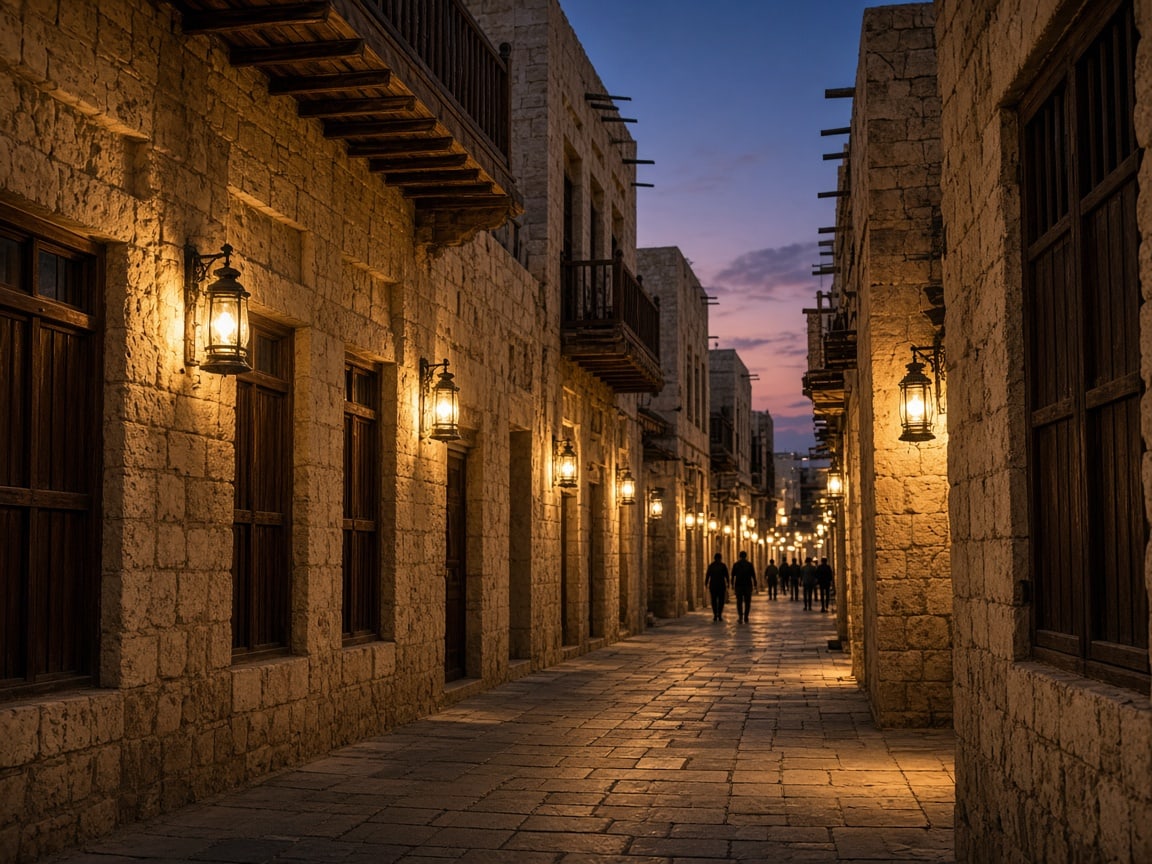
A souq is a traditional market or bazaar in the Arab world. Souq Waqif in Doha is the best-known example: a maze of lanes selling spices, fabric, perfume, gold, birds and food. It is free to enter, liveliest after 17:00, and the anchor of most Doha city tours.
Souq Waqif guide →Majlis
A majlis is a sitting room or formal gathering space in a Gulf home, where guests are received and community matters are discussed. You will see majlis-style seating in museums, desert camps and cultural venues such as Katara. Shoes are usually removed before entering.
Katara Cultural Village →Abaya
An abaya is a long, loose robe worn by many women in Qatar and the Gulf over everyday clothes. It is not required for tourists, but modest dress — shoulders and knees covered — is appreciated in souqs, museums and cultural sites. Scarves are often provided at mosques.
Dress code and what to wear →Thobe
A thobe is the long white robe worn by many Qatari men, usually with a ghutra head covering. It is everyday national dress rather than ceremonial costume. Visitors are welcome to wear Western clothing, but modest dress is respectful in cultural and religious sites.
Qatar travel FAQ →Falconry
Falconry is the traditional art of hunting with trained falcons, practised in Qatar for centuries and still a valued heritage sport. Souq Waqif has a dedicated falcon souq where birds are bought and sold in season. Ask before photographing falcons or their handlers.
Souq Waqif guide →Pearl diving
Pearl diving was Qatar's main industry before oil, with crews sailing to oyster beds for months at a time. The National Museum of Qatar and the Al Zubarah archaeological site both tell that story. Pearl-diving heritage shapes Qatari identity and the country's maritime museums.
National Museum of Qatar →Katara Cultural Village
Katara Cultural Village is a purpose-built cultural district on the Doha coast between West Bay and Lusail. It has an amphitheatre, tiled mosques, galleries, theatres, a beach and restaurants. Entry is free, and it is best visited in the late afternoon or evening.
Katara guide →The Pearl-Qatar
The Pearl-Qatar is a man-made island of marinas, apartment towers, shops and restaurants north of West Bay. Porto Arabia is the main marina and Qanat Quartier has the canals and bridges. It is free to walk around and works best as a sunset or dinner stop.
The Pearl guide →Lusail
Lusail is the planned city about 23 km north of central Doha, built in the last two decades. It hosted the 2022 World Cup final and is known for the Katara Towers, Lusail Marina and Place Vendome mall. It is connected to the Doha Metro.
Lusail guide →Doha Corniche
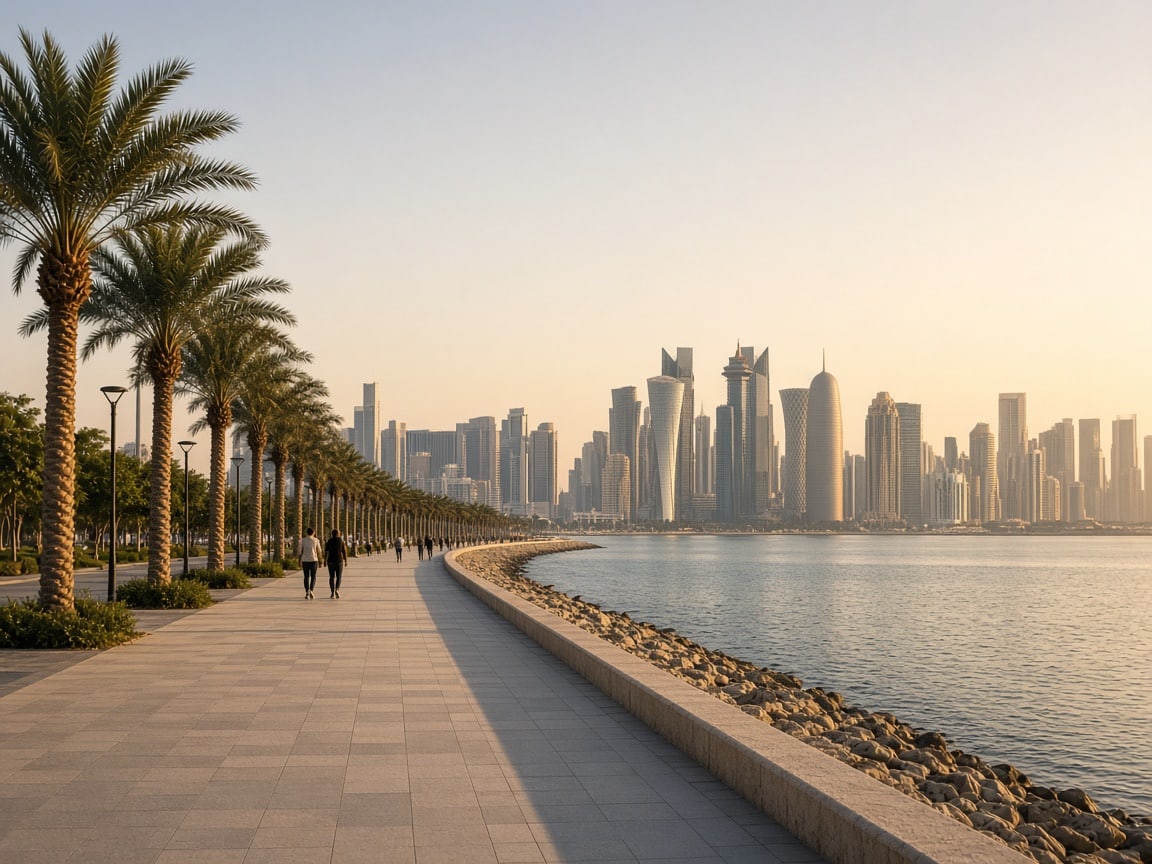
The Doha Corniche is the seven-kilometre waterfront promenade curving around Doha Bay, with the West Bay skyline on one side and the old city on the other. It is free, open all day and best at sunset. Dhows leave from the Corniche harbour for bay cruises.
Corniche guide →Al Zubarah
Al Zubarah is the site of an eighteenth-century pearling and trading town in north-west Qatar, with a fort built in 1938. It became a UNESCO World Heritage Site in 2013 and is the country's most important historic site, about 90 minutes by road from Doha.
Al Zubarah guide →